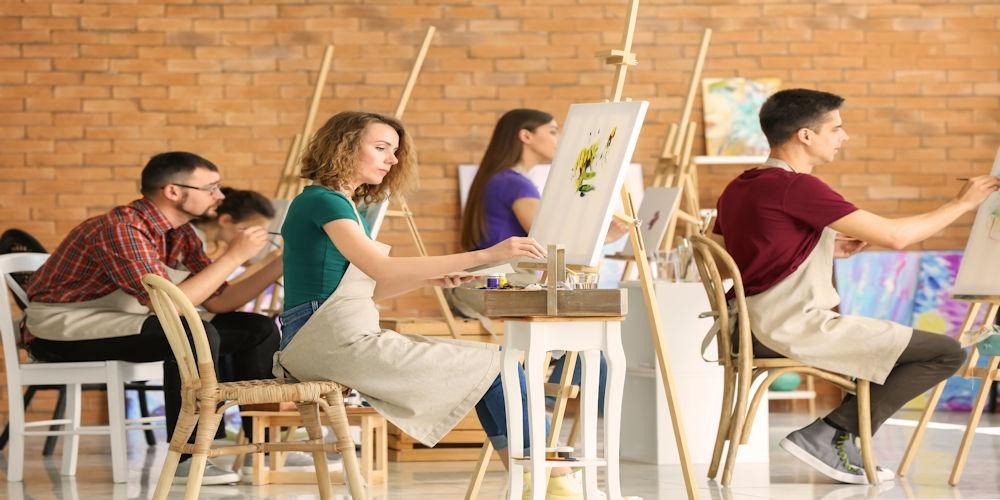
The Unseen Dance: Where Art Meets the Soul

The Unseen Dance: Where Art Meets the Soul
Art is not merely a visual feast or an auditory delight—it is a silent conversation between the creator and the observer, a dialogue that transcends words. It whispers to the soul in hues, rhythms, and movements, awakening emotions that often lie dormant beneath the surface of everyday life. This unseen dance between art and the soul is not just a metaphor; it is a profound reality that has shaped human expression for centuries. Whether through a painting, a melody, or a dance, art has the power to touch something deeper than the mind—it reaches the very core of our being.
The Language of Art: Beyond Words
Human language is powerful, yet it is limited. It struggles to capture the complexity of feelings, the subtlety of experiences, or the fleeting moments that define our existence. Art, on the other hand, speaks in a language that bypasses the rational mind and speaks directly to the heart. A single brushstroke can convey loneliness, a haunting melody can evoke nostalgia, and a sculpted figure can embody resilience. This silent communication is what makes art so uniquely powerful—it does not demand interpretation but invites participation.
- Visual Art: A painting by Van Gogh does not just depict a starry night; it immerses the viewer in a swirling cosmos of emotion, where chaos and serenity coexist. The thick, expressive brushstrokes are not just technique—they are the artist’s heartbeat, frozen in time.
- Music: A symphony by Beethoven does not tell a story; it *is* the story. The crescendos and decrescendos mirror the rise and fall of human struggles, triumphs, and inner turmoil. Music does not describe grief—it *is* grief, transformed into something beautiful and universal.
- Dance: A ballet performance is not just movement; it is a physical manifestation of emotion. Every leap, every twirl, every pause is a conversation with the audience, a silent scream or a whispered sigh that words cannot express.
The Soul’s Reflection: Why Art Resonates
The soul is the seat of our deepest emotions, our unspoken dreams, and our hidden fears. Art acts as a mirror, reflecting these intangible aspects back to us in forms we can understand and feel. When we engage with art, we are not just observing—we are participating in a ritual of self-discovery. A piece of art might resonate with us because it captures a truth we have always felt but never articulated, or it might challenge us to see the world (and ourselves) in a new light.
Consider the way a photograph of a deserted street at dusk can evoke a sense of longing, or how a piece of abstract sculpture can feel like a puzzle that pieces together fragments of our own thoughts. Art does not impose meaning; it offers a space for meaning to unfold naturally within us. It is this dynamic, this interplay between the external and the internal, that makes art a vital force in human existence.
The Healing Power of Art
Art is not just for the elite or the talented—it is a universal language of healing. Across cultures and throughout history, art has been used as a tool for therapy, meditation, and catharsis. When words fail, art steps in. For those who have experienced trauma, art can provide a safe outlet for expression. For those who feel isolated, art can create a sense of connection. The act of creating—whether it’s scribbling in a sketchbook, humming a tune, or moving to a rhythm—can be a form of release, a way to externalize the internal.
Art therapy is now a recognized field, proving what artists and philosophers have long intuited: that the process of making art is as important as the final product. It is a way to slow down, to listen, and to reconnect with oneself. Even passive engagement with art—viewing, listening, or absorbing—can have a meditative effect, grounding us in the present moment and allowing the soul to breathe.
The Artist as a Channel: Creativity as a Spiritual Act
There is a mystique surrounding the creative process, as if artists are merely vessels through which something greater flows. Many creators describe their work as a spiritual act—an experience where their ego dissolves, and they become a conduit for inspiration. Whether it’s a poet channelling the muse or a musician improvising in the moment, art often feels less like a product and more like a sacred ritual.
This idea is not new; it dates back to ancient times when art was intertwined with religion and mythology. The cave paintings of Lascaux were not just decorations—they were acts of communion with the divine. Today, artists like Yayoi Kusama or musicians like John Coltrane have spoken about their work in terms of transcendence, describing moments where they felt connected to something beyond themselves. This is the unseen dance at its most powerful: the artist and the soul merging with the universe.
The Observer’s Role: Participation in the Dance
Art is not a one-way street. The observer plays an active role in completing the artwork. A painting hanging in a gallery is not truly alive until someone stops, looks, and feels. A song on the radio is just noise until it resonates with a listener’s emotions. This participation is what gives art its vitality—it is a collaboration between the creator and the audience, a silent handshake across time and space.
Consider how a piece of art changes depending on who is viewing it. A sculpture that seems cold and unfeeling in one context might evoke tears in another. A song that once felt dull might suddenly become a soundtrack to a pivotal moment in someone’s life. This fluidity is what makes art timeless. It adapts, evolves, and grows with each new observer, becoming a living entity rather than a static object.
The Unseen Threads: How Art Connects Humanity
Art is one of the few things that unites humanity across borders, languages, and generations. A cave painting from 17,000 years ago can evoke the same awe as a modern digital artwork. A folk song from a remote village can move someone halfway across the world. This universality stems from art’s ability to tap into shared human experiences—love, loss, joy, fear. It reminds us that, despite our differences, we are all connected by the same invisible threads of emotion.
In a world that often emphasizes division, art is a reminder of our shared humanity. It challenges us to see beyond the surface, to empathize, and to find beauty in unexpected places. The unseen dance between art and the soul is not just a personal journey—it is a collective one. Every time we engage with art, we are participating in a dialogue that has been ongoing since the dawn of consciousness.
The Future of the Dance: Art in a Digital Age
As technology advances, so too does the way we create and experience art. Virtual reality, artificial intelligence, and digital platforms are opening new frontiers for artistic expression. Artists are no longer bound by physical limitations; they can create immersive experiences that engage all the senses. Meanwhile, social media has democratized art, allowing creators from all walks of life to share their work with global audiences.
Yet, in this digital age, the core of art remains unchanged. Whether it’s a hand-painted canvas or a 3D-rendered masterpiece, the goal is the same: to touch the soul. The tools may evolve, but the dance between art and the soul endures. It is a reminder that, in a world of rapid change, some things remain timeless.
Conclusion: Embrace the Dance
The unseen dance between art and the soul is a journey worth taking. It does not require expertise or talent—only an open heart and a willingness to engage. Art is not something to be admired from afar; it is something to be experienced, to be lived. Whether you are the creator, the observer, or both, the dance is yours to join.
So the next time you encounter a piece of art—whether it’s a song on the radio, a sculpture in a park, or a poem in a book—take a moment to pause. Let it speak to you. Let it move you. Because in that moment, you are not just witnessing art—you are part of its unseen dance.